


Hidden Treasures
Museum Boijmans Van Beuningen’s collection contains more than 154,000 objects. In this column members of the museum staff choose their favourite artworks, now still hidden behind closed doors, but soon to be seen in the depot. This time curators Saskia van Kampen-Prein and Peter van der Coelen select surreal works from the collection.
Timeless Surrealist Art
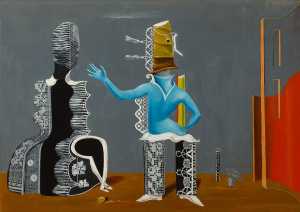
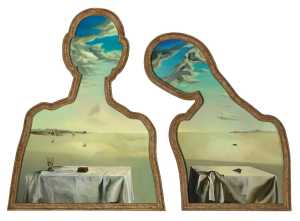
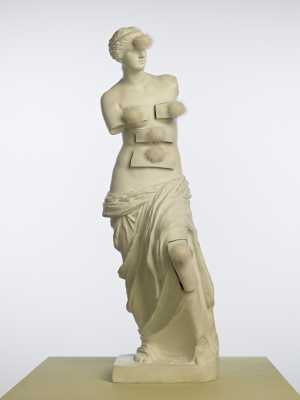
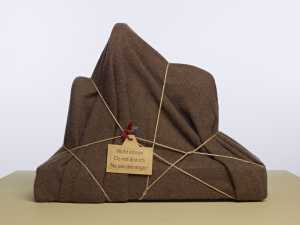
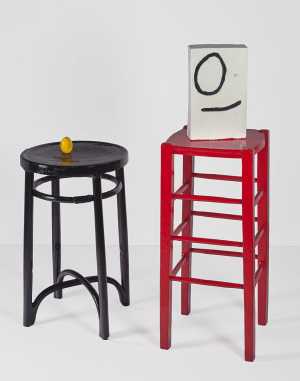
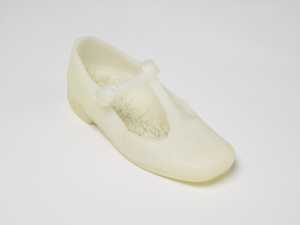
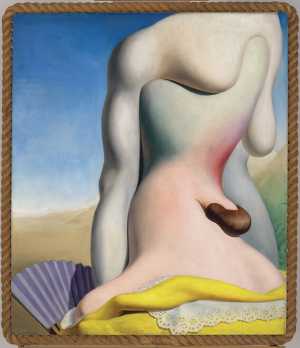
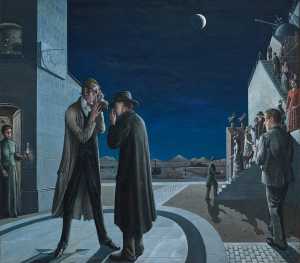
Museum Boijmans Van Beuningen is the only museum in the Netherlands with an extensive collection of world-class Surrealist art. The museum has been collecting paintings and other objects by Dalí, Magritte, Ernst and others since the nineteen-sixties. Imagination, dreams and the absurd are key elements in Surrealist art. Surrealism is by no means a closed movement. Fantastic imaginary worlds full of bewildering figures start with Jheronimus Bosch, and the surreal perspective continues as a leitmotif through the collection. To this day artists and designers offer us their disconcerting, shocking or curious take on everyday reality. These links between objects from different eras shed new light on the collection.






A Head Full of Things
Peter: Arcimboldo’s heads composed of vegetables and fruit are much admired because of their bizarre character and the surprising optical illusion. Paintings by this Italian artist are relatively rare and no Dutch museum has one. Prints of his compositions are also few and far between. The museum was able to acquire this work three years ago. In this example the head is made up not of vegetables and fruit but of all sorts of things associated with preparing food: a pestle, a strainer, spoons and forks and other utensils that were essential in a sixteenth-century kitchen. Across the top are the words ‘humani victus instrumenta’: instruments of human sustenance. The print’s design was probably based on a drawing or painting by Arcimboldo, but the example has not survived. Arcimboldo earned recognition as an artist in his own time. He worked at the imperial court in Prague. He was rediscovered in the twentieth century by surrealists such as Dalí, who saw him as a ‘great-grandfather’.

Paranoid Portrait
Saskia: At the end of the nineteentwenties the Spanish surrealist Salvador Dalí developed a technique based on madness or paranoid thinking. This resulted in detailed painted double images that can be interpreted in different ways. In other words, a depiction of a barren landscape with standing and crouching figures can also be seen as a portrait. Dalí described paranoid thinking as a ‘delirium of interpretations’. He used this to mean that looking at a single image could initiate an endless series of interpretations. He said he painted ‘The Great Paranoiac’ after a discussion about the sixteenth-century Italian artist Giuseppe Arcimboldo, who is best known for his ‘portraits’ composed of fruit or fish, tree branches, books and even utensils. The museum holds various double images by Dalí, and since 2017 has also owned a print by Arcimboldo that points up the similarity between the work of the two artists at a glance.

Devils and Demons
Peter: Jheronimus Bosch was much loved in his own lifetime for his fantastical and imaginative work. The museum owns two famous paintings by him, ‘The Pedlar’ and ‘St Christopher’, as well as ‘The Owls’ Nest’, one of the finest drawings ever made. The collection also contains a considerable number of works by followers of Bosch, for example this ‘Temptation of St Anthony’. The painting was made a quarter of a century after Bosch’s death. It is a faithful copy of the central panel of his Temptation of St Anthony triptych in the Portuguese Museu Nacional de Arte Antiga in Lisbon. The saint kneels in a world full of devils and demons, fearsome monsters that try to strip him of his faith. No other artist rivalled Bosch at depicting such creative, visionary and often perplexing motifs. For centuries they have appealed to people’s imagination and inspired artists without number, including of course the Surrealists.

Surrealism in Mexico
Saskia: The lives of the British artist Leonora Carrington and her lover, the German artist Max Ernst, changed radically soon after they had settled in the South of France. As a result of the Second World War, Ernst ended up in prison and Carrington felt compelled to flee to Spain. In Madrid she visited Museo del Prado, where she came face to face with Jheronimus Bosch’s famous triptych ‘The Garden of Earthly Delights’ (1490-1500). His fantastical compositions were a source of inspiration for many Surrealists and made a lasting impression on her. This is reflected in the fantastical, mysterious paintings she produced in the second half of the nineteen-forties from her new base, Mexico City. One of them is ‘Again, the Gemini are in the Orchard’, which is of a walled garden containing ghostly apparitions, tall trees and pillars. Whereas Bosch’s scenes were of heaven and hell, Carrington’s subjects remain indefinable. She does not want to explain her work, but she appeals to our imagination.

Depot Journal
This article has been published before in Depot Journal #4 which is part of a series of six. If you would like to receive all the printed Depot journals by post, please send an email to info@boijmans.nl with your full name and address, reference ‘receive Depot Journals’.