:host { --enviso-primary-color: #FF8A21; --enviso-secondary-color: #FF8A21; font-family: 'boijmans-font', Arial, Helvetica,sans-serif; } .enviso-basket-button-wrapper { position: relative; top: 5px; } .enviso-btn { font-size: 22px; } .enviso-basket-button-items-amount { font-size: 12px; line-height: 1; background: #F18700; color: white; border-radius: 50%; width: 24px; height: 24px; min-width: 0; display: flex; align-items: center; justify-content: center; text-align: center; font-weight: bold; padding: 0; top: -13px; right: -12px; } .enviso-dialog-content { overflow: auto; } Previous Next Facebook Instagram Twitter Pinterest Tiktok Linkedin Back to top
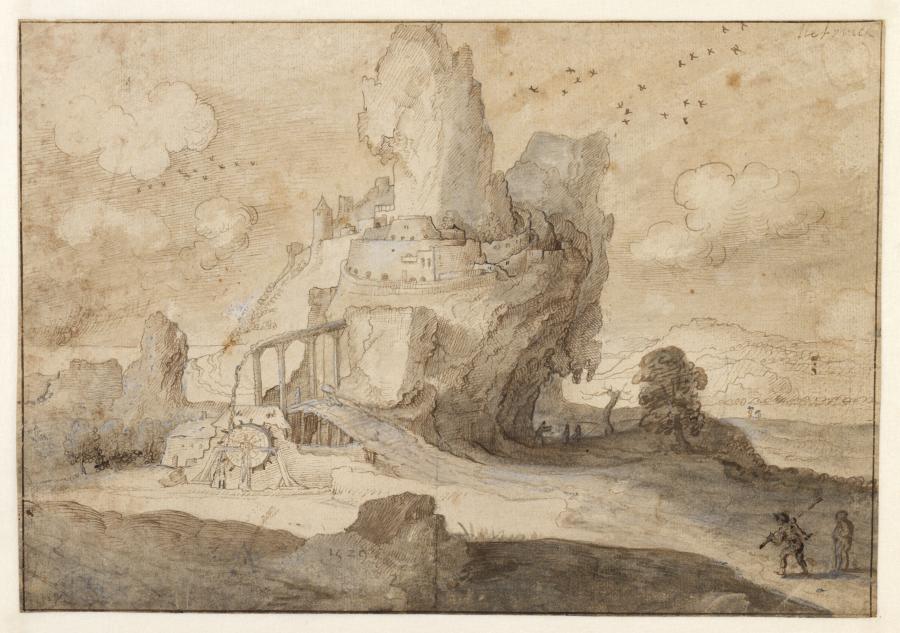
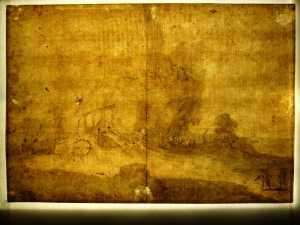
Fantasy Landscape with a Rock Fortress, Water Mill and Iron Mine

Fantasy Landscape with a Rock Fortress, Water Mill and Iron Mine

Attributed to: Johannes Liefrinck (in circa 1580-1599)

Ask anything

Loading...

Thank you. Your question has been submitted.

Unfortunately something has gone wrong while sending your question. Please try again.

Request high-res image

More information

Specifications

Title Fantasy Landscape with a Rock Fortress, Water Mill and Iron Mine
Material and technique Black chalk, pen and brush and brown ink, gray and brown wash, heightened with white, framing lines with the pen in brown ink
Object type
Drawing > Two-dimensional object > Art object
Location This object is in storage
Dimensions Height 195 mm
Width 281 mm
Artists Attributed to: Johannes Liefrinck
Accession number N 118 (PK)
Credits Loan Stichting Museum Boijmans Van Beuningen (former Koenigs collection), 1940
Department Drawings & Prints
Acquisition date 1940
Creation date in circa 1580-1599
Signature none
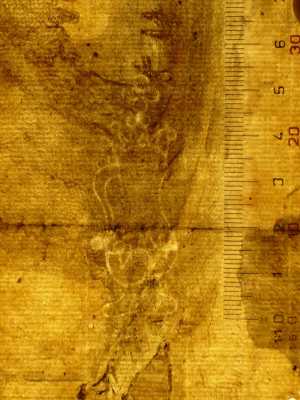
Watermark pot, possibly with initials (indistinct), crowned and surmounted by a quadrifoil (53x19mm, lower centre, between P3-4 from below), Northern French make, similar to several varieties in Briquet, a.o. Briquet 12697 (doc. Chartres 1589) (vV, 9P, fine). [for image click thumbnail above the 'zoom in' option]
Condition foxing, the lead white of the heightenings oxidised in places
Inscriptions 'liefrinck' (at upper right, in pen and brown ink), '1529' (at lower centre, in pen and brown ink), '12' (verso, at upper centre, in pencil), '3314 S' (verso, at lower left, in pen and brown ink)
Collector Collector / Franz Koenigs
Mark F.W. Koenigs (L.1023a)
Provenance Through art dealer Nicolaas Beets (1878-1963), Amsterdam to Franz W. Koenigs (1881-1941), Haarlem, 1928 [information museum]; on loan to the museum, 1935-1940; purchased with the Koenigs collection by D.G. van Beuningen (1871-1955), Rotterdam and presented to the Stichting Museum Boymans, 1940; on loan to the museum since 1940
Exhibitions Rotterdam 2004b
Research Show research Netherlandish Drawings of the Fifteenth and Sixteenth Centuries
Literature none
Material
Object
Technique
Highlight > Painting technique > Technique > Material and technique
Brown wash > Washing > Wash > Drawing technique > Technique > Material and technique
Grey wash > Washing > Wash > Drawing technique > Technique > Material and technique
Geographical origin Southern Netherlands > The Netherlands > Western Europe > Europe

Entry catalogue Netherlandish Drawings of the 15th and 16th Centuries.

Author: Judith Niessen

This description is currently only available in Dutch.

Deze tekening kent nauwelijks vergelijkingsmateriaal om de oude toeschrijving aan Hans Liefrinck te kunnen toetsen. De enige (schijnbaar gemonogrammeerde) tekening van Liefrinck met reizigers in een rotsachtig landschap, is namelijk zeer schetsmatig van opzet (afb).1 Dit in tegenstelling tot het dichte patroon van kleine kruisarceringen en fijne pennenstreken waarmee dit rotslandschap is getekend. Toch zijn er een paar aanknopingspunten met de schetsmatige tekening om de toeschrijving aan Liefrinck voorlopig te handhaven. In dat landschap zijn in de bomen wassingen te zien die, net als hier, de indruk wekken door een andere hand te zijn aangebracht. Het mannetje onder de rots is tevens enigszins verwant aan de twee mannetjes die in deze tekening rechtsonder staan. Ook de lossere uitwerking van de heuvels in de achtergrond sluit aan bij de lijnvoering van de gemonogrammeerde tekening. De sliertige lijnen die het verloop van de weg aangeven komen in beide landschappen voor.

Hans Liefrinck en diens zoon Cornelis (ca. 1581-na 1652) schilderden grillige rotspartijen in de stijl van Joachim Patinir (ca. 1480-1524).2 Ook de grillige rots in deze voorstelling is geïnspireerd op die kunstenaar. Niet lang na het ontstaan van de tekening voorzag iemand het blad van een datum van 1529, waardoor het leek alsof de tekening in de tijd van Patinir was vervaardigd. De tekening verraadt zich evenwel door de tekenstijl en de voorstelling. De donker gewassen voorgrond, waarachter het lichter gekleurde landschap is getekend, is een element dat veelvuldig werd gebruikt door kunstenaars als Gillis van Coninxloo. Daarnaast tekende Liefrinck elementen van een ijzermijn- en gieterij, namelijk de hoge brug waar vanaf het water naar de molen stroomt. Dergelijke motieven werden al eerder in de zestiende eeuw in landschappen weergegeven, maar waren met name populair bij tijdgenoten van Liefrinck, zoals de gebroeders van Valckenborch.3

Footnotes

1 Kunsthandel M.L. Wurfbain, Oegstgeest, 1990.

2 Russell 1992, p. 176.

3 Zie het Landschap met ijzermijn van Lucas van Valckenborch, Wenen, Kunsthistorisches Museum, inv. nr. 1023. Wied 1990, nr. 40, ill.

Show research Netherlandish Drawings of the Fifteenth and Sixteenth Centuries
Show catalogue entry Hide catalogue entry

All about the artist

Johannes Liefrinck

Antwerpen 1538 - Leiden 1599

Bekijk het volledige profiel