:host { --enviso-primary-color: #FF8A21; --enviso-secondary-color: #FF8A21; font-family: 'boijmans-font', Arial, Helvetica,sans-serif; } .enviso-basket-button-wrapper { position: relative; top: 5px; } .enviso-btn { font-size: 22px; } .enviso-basket-button-items-amount { font-size: 12px; line-height: 1; background: #F18700; color: white; border-radius: 50%; width: 24px; height: 24px; min-width: 0; display: flex; align-items: center; justify-content: center; text-align: center; font-weight: bold; padding: 0; top: -13px; right: -12px; } .enviso-dialog-content { overflow: auto; } Previous Next Facebook Instagram Twitter Pinterest Tiktok Linkedin Back to top
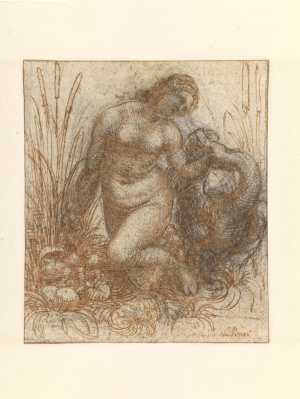
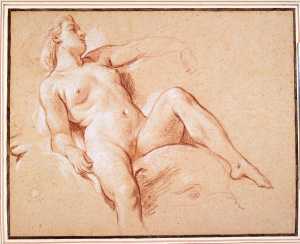
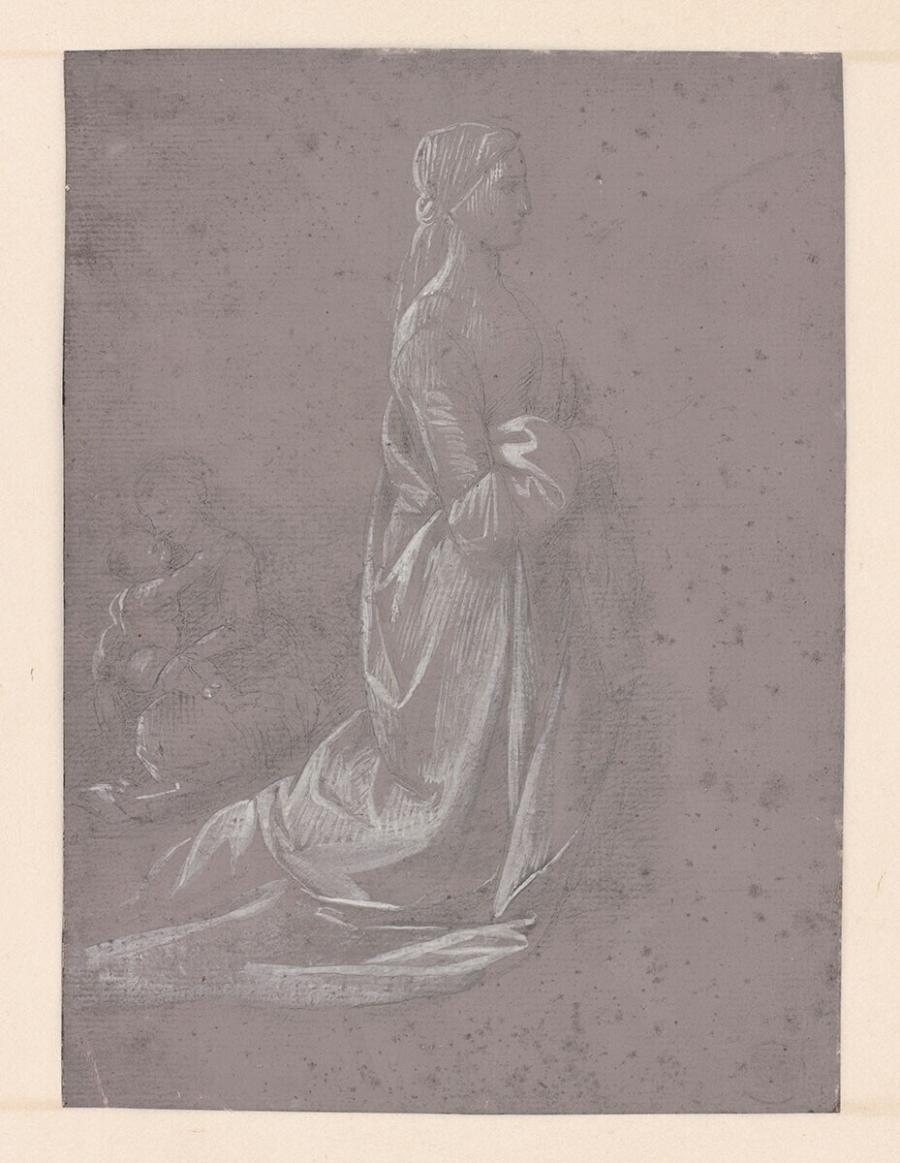
Study of a Kneeling Woman

Study of a Kneeling Woman

Anoniem (in circa 1455-1494)

Ask anything

Loading...

Thank you. Your question has been submitted.

Unfortunately something has gone wrong while sending your question. Please try again.

Request high-res image

More information

Specifications

Title Study of a Kneeling Woman
Material and technique Metalpoint, heightened with white, on grey prepared paper
Object type
Drawing > Two-dimensional object > Art object
Location This object is in storage
Dimensions Height 248 mm
Width 181 mm
Artists : Anoniem
: Fra Bartolommeo (Bartolomeo-Domenico di Paolo del Fattorino, Baccio della Porta)
: Giovanni Santi
Accession number I 258 (PK)
Credits Loan Stichting Museum Boijmans Van Beuningen (former Koenigs collection), 1940
Department Drawings & Prints
Acquisition date 1940
Creation date in circa 1455-1494
Watermark none ? (poorly visible, vH, 6?P)
Collector Collector / Franz Koenigs
Mark J.D. Böhm (L.1442, L.271), F.W. Koenigs (L.1023a)
Provenance Joseph D. Böhm (1794-1865, L.271, L.272, L.1442)**, Vienna; his sale, Vienna (Posonyi) 04.12.1865, lot unknown; - ; Art dealer Gustav Nebehay, Berlin/Vienna (Filippino Lippi); Franz W. Koenigs (1881-1941, L.1023a), Haarlem, acquired in 1927 (Giovanni Santi); D.G. van Beuningen (1877-1955), Rotterdam, acquired with the Koenigs Collection in 1940 and donated to Stichting Museum Boijmans Van Beuningen
Research Show research Italian Drawings 1400-1600
Material
Object
Technique
Prepare > Prepared > Shaping techniques > General technique > Technique > Material and technique
Highlight > Painting technique > Technique > Material and technique
Geographical origin Italy > Southern Europe > Europe

Do you have corrections or additional information about this work? Please, send us a message
Entry catalogue Italian Drawings 1400-1600

Author: Mees Knarren

There are two other versions of this sheet depicting a kneeling woman and a Virgin and Child on grey prepared paper: one is in Florence,[1] the other in Paris.[2] The use of white heightening in conveying surface and texture in the Florence drawing is superior to that in the two other (later) works, and the Rotterdam sheet in particular looks inept in the vertical highlights and the strikingly flat hatching in the face. The Florence sheet has been attributed to various artists, among them Raphael (1483-1520),[3] the school of Raphael, Piero di Cosimo (1462-1521)[4] and Fra Bartolommeo (1472/1474-1517).[5] It is assumed that the sheet in Paris is a copy of the Florence drawing, described by the Louvre as a work by Fra Bartolommeo. Franz Koenigs acquired the Rotterdam drawing in 1927 as a work by Raphael’s father, Giovanni Santi (c.1435-1494). Before Koenigs purchased the Rotterdam sheet in 1927, art dealer Gustav Nebehay attributed it to the Florentine artist Filippino Lippi (1457-1504). In 1970 Felton Gibbons said that he agreed with Nebehay about a Florentine provenance, but personally thought Davide Ghirlandaio (1452-1525) more likely, so there is no definite answer as to the authorship of the three sheets.  

Everett Fahy was the first to make a connection between the Florence sheet and the Altarpiece of St Vincent Ferrer by Domenico Ghirlandaio (1448-1494) and his workshop.[6] He suggested that the Florence sheet is a preparatory portrait study of Elisabetta Aldobrandini, one of the female donors pictured in the lower register of the altarpiece, executed by another hand.[7] The Malatesta family pictured on the altarpiece fell into disgrace, and the portraits were overpainted in 1547-48, as emerges from Giorgio Vasari’s (1511-1574) description of the work during his visit to Rimini.[8] It was not until 1924 that the portraits came to light again.[9] Fahy attributes both the donor portraits and the Florence sheet to a young Fra Bartolommeo, who was known as Baccio della Porta before he took his vows.[10] Fra Bartolommeo specialist Chris Fischer refuted Fahy’s theory, however, and argued that the master had no hand in the altarpiece and that the preparatory drawing is not by him either. Fischer cautiously suggested Mariotto Albertinelli (1474-1515), with whom Fra Bartolommeo shared his workshop, as the maker of the Florence sheet and the donor portraits.[11] He connected the white highlights on the Florence sheet, which run in thin, vertical lines, to the heightening in Albertinelli’s studies of two angels in the same collection.[12] This method is essentially different from his friend and colleague Fra Bartolommeo’s tighter hatching manner. Fischer also argues that the draperies in the Florence drawing, which fall in large folds, correspond with Albertinelli’s approach but not with Fra Bartolommeo’s: he preferred crumpled and wrinkled draperies.[13]

Another drawing that was previously in Rotterdam is also related to the altarpiece: the supposed study for the donor portrait of Elisabetta Aldobrandini’s youngest son, Carlo Malatesta (1480-1508).[14] It shows Carlo kneeling on the left with the Virgin and Child on the right. Between them is a drapery study. In 1928 Lili Fröhlich-Bum labelled this work an indisputable Santi based on the angular poses in conjunction with flowing lines with which the artist expressed the figures’ personality through body language.[15] However, the altarpiece was only just completed in 1494, the year of Santi’s death. In 1929 Evelyn Sandberg-Vavalà rejected the attribution to Santi and credited the drawing to a young Fra Bartolommeo.[16] Fahy agreed with this because of the connection to the altarpiece. However, Fischer was not convinced of his authorship of this work either, and rejected the attribution in 1986.[17] On the basis of the quite heavy-handed use of silverpoint and a use of heightening similar to the studies of angels referred to above, he likewise attributed this sheet with reservations to Albertinelli.[18] He also commented that the physiological characteristics of the figures in combination with the sculptural draperies that almost weightlessly clad the delicate  and angular figures correspond with this artist’s pictorial idiom. According to Fischer, the connection that this sheet, too, has with the St Vincent Ferrer altarpiece further emphasizes that the portraits were made not by Fra Bartolommeo, but by his colleague Albertinelli.[19] This makes our drawing a copy after one of the preparatory studies for the altarpiece, most probably made in the circle of Fra Bartolommeo or Albertinelli.

Footnotes

[1] Gallerie degli Uffizi, inv. 1329 F.

[2] Musée du Louvre, inv. 4351, recto.

[3] Florence 1991, 1329 F. (z.p.).

[4] Ibidem.

[5] Fahy 1966, p. 459.

[6] Rimini, Museo della Città.

[7] For further discussion about the unusual presence of Elisabetta as a female donor, see Nelson 2019, pp. 227, 229, 230, 231.

[8] Ibidem, p. 222.

[9] Fahy 1966, p. 456.

[10] Ibidem, p. 459.

[11] Unpublished entry from Fischer’s own database, shared by e-mail correspondence, 7 February 2023.

[12] Gallerie degli Uffizi, inv. 560 E. and 561 E.

[13] Unpublished entry from Fischer’s own database, shared by e-mail correspondence, 7 February 2023.

[14] The drawing is now in the Pushkin Museum in Moscow where it is claimed by the State of the Netherlands. For more information about this claim, see The Koenigs Collection.

[15] Fröhlich-Bum 1928a, p. 43.

[16] Sandberg-Vavalà 1929, p. 4.

[17] Fischer 1986, p. 34. According to e-mail correspondence on 7 February 2023 Fischer still rejects the attribution of the donor studies and the donor portraits to Fra Bartolommeo.

[18] Unpublished entry from Fischer’s own database, shared by e-mail correspondence, 7 February 2023.

[19] Ibidem.

Show research Italian Drawings 1400-1600
Show catalogue entry Hide catalogue entry

All about the artist