:host { --enviso-primary-color: #FF8A21; --enviso-secondary-color: #FF8A21; font-family: 'boijmans-font', Arial, Helvetica,sans-serif; } .enviso-basket-button-wrapper { position: relative; top: 5px; } .enviso-btn { font-size: 22px; } .enviso-basket-button-items-amount { font-size: 12px; line-height: 1; background: #F18700; color: white; border-radius: 50%; width: 24px; height: 24px; min-width: 0; display: flex; align-items: center; justify-content: center; text-align: center; font-weight: bold; padding: 0; top: -13px; right: -12px; } .enviso-dialog-content { overflow: auto; } Previous Next Facebook Instagram Twitter Pinterest Tiktok Linkedin Back to top
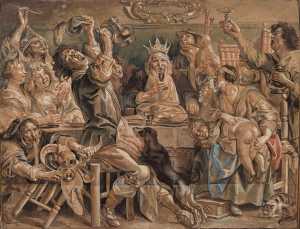
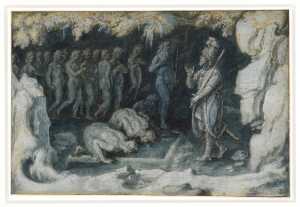
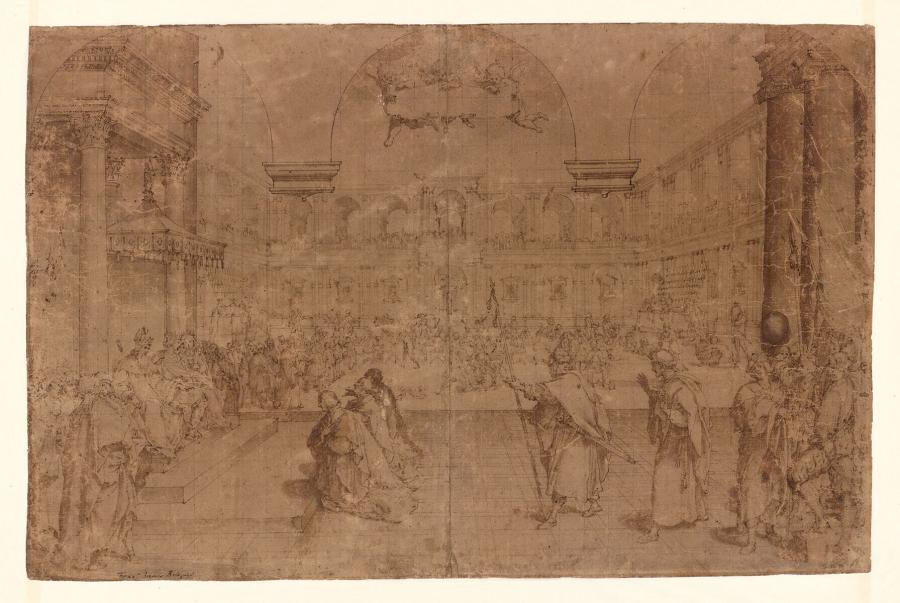
Preliminary study for 'The Parable of the Wedding Feast'

Preliminary study for 'The Parable of the Wedding Feast'

Bartolommeo Cesi (in circa 1600-1610)

Ask anything

Loading...

Thank you. Your question has been submitted.

Unfortunately something has gone wrong while sending your question. Please try again.

Request high-res image

More information

Specifications

Title Preliminary study for 'The Parable of the Wedding Feast'
Material and technique Pen and brown ink, brown wash, squared, on brownish paper
Object type
Drawing > Two-dimensional object > Art object
Location This object is in storage
Dimensions Height 356 mm
Width 544 mm
Artists Draughtsman: Bartolommeo Cesi
Accession number I 230 (PK)
Credits Loan Stichting Museum Boijmans Van Beuningen (former Koenigs collection), 1940
Department Drawings & Prints
Acquisition date 1940
Creation date in circa 1600-1610
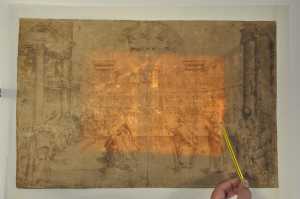
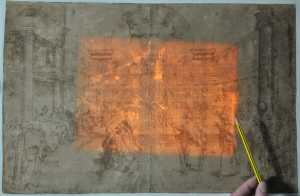
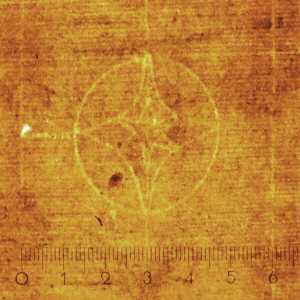
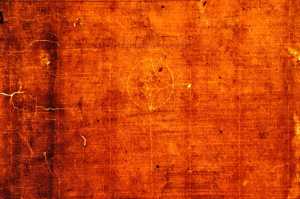
Watermark Six-pointed star in a circle (39 x 35 mm, centre of right half, on P12 of 15P, plano), similar to Briquet 6097 (Lucca 1566-67, Rome 1567-71, Fabriano 1572) and Piccard Online DE5580 (16th century)
Inscriptions 'Fran.co Briccio Bolognese' (below left, pen and dark brown ink), 'S.B. ao 18' (below right, pen and ink)
Collector Collector / Franz Koenigs
Mark F.W. Koenigs (L.1023a)
Provenance Franz W. Koenigs (1881-1941, L.1023a), Haarlem, acquired in 1928 (Bolognese School, second half 16th century); D.G. van Beuningen (1877-1955), Rotterdam, acquired with the Koenigs Collection in 1940 and donated to Stichting Museum Boijmans Van Beuningen
Research Show research Italian Drawings 1400-1600
Literature Zacchi 1997, p. 146, fig. 24; Morét 2015, pp. 83, 87, fig. 3
Material
Object
Geographical origin Italy > Southern Europe > Europe
Place of manufacture Bologna > Italy > Southern Europe > Europe

Do you have corrections or additional information about this work? Please, send us a message

Entry catalogue Italian Drawings 1400-1600

Author: Surya Stemerding

Bartolommeo Cesi, 'The Parable of the Wedding Feast', fresco, San Giovanni in Monte, Bologna. Photo Guido Barbi

This large drawing in poor condition is the modello for the fresco The Parable of the Wedding Feast (fig.) that Bartolommeo Cesi painted in the monastery of San Giovanni in Monte in Bologna.

According to the reconstruction by Zacchi (1997), Cesi made the fresco in the first decade of the seventeenth century.[1] In the twentieth century it was removed from the wall (staccato) for a long-term restoration treatment and remained stored in six separate pieces in the Pinacoteca Nazionale in Bologna for four decades. In 1996 the fresco was put back in its original position in the monastery’s former refectory.

The drawing illustrates a parable described in the Gospel of St Matthew (22:1-14).[2] It compares heaven to a royal wedding feast. A king, preparing a wedding feast for his son, sent his servants out to all corners of the world to invite the guests, but they refused to come and mistreated and murdered the servants. The king sent his troops to kill all the murderers and burn their cities. In their place he invited anyone and everyone his servants came across in the street, provided they dressed and behaved with dignity during the wedding. They all streamed into the banqueting hall. Then, amidst the festivities, the king saw a guest who was not appropriately dressed, despite the warning, and had him removed. The parable ends with the words: ‘for many are invited, but few are chosen'. The moral of the story is that only a few of the chosen ones actually reach the Kingdom of Heaven because they make the wrong choices during their lives.

The sheet in Rotterdam was squared so as to transfer the composition to a cartoon. That cartoon was used for a one-to-one transfer onto the wall, after which the fresco was painted. The differences between the modello and the fresco are minimal. The architectural space is identical down to the smallest detail; even the groins of the cross vault of the refectory were transferred.

Two other preliminary studies for the fresco are known; they are now in Berlin and Würzburg.[3] The smaller drawing in Berlin shows an earlier stage in the design process. Although many elements of the eventual design can already be seen, the banquet scene in the background has been separated from the foreground by a huge loggia with a view through to an outside space. The foreground is executed in dark washes, while the scenes in the background are lightly sketched.[4] The drawing in Würzburg is an intermediate stage, probably directly preceding the modello in Rotterdam, which is the same size. The Würzburg sheet was executed in pen and brush and brown ink, over an underdrawing in red chalk, without washes. The architectural space there is the same as that in the Rotterdam modello, as is the dining table with wedding guests in the middle ground. The figures in the foreground, who make their way past the king on his throne in a procession moving from right to left, are only partly worked out. Only the group of figures on the extreme right corresponds with the one in the modello. A number of individual studies for the figures in the middle and left foreground must have been made between the two design drawings.

Here and there, Cesi borrowed figures in the final composition from earlier works of his own.[5] The artist often reused existing figures with which he was particularly pleased for new compositions.

Footnotes

[1] Zacchi based the dating on figures from previous commissions that had been reused in the fresco. The dating was endorsed in Morét 2015.

[2] Cesi may have been familiar with an engraving by Adriaen Collaert to a design by Bernardino Passeri in Jerónimo Nadal, Evangelicae historiae imagines, Antwerp 1593, pl. 93; Morét 2015, p. 81, fig. 2.

[3] Staatliche Museen, Kupferstichkabinett, inv. KDZ 18333 (288 x 375 mm); Martin von Wagner Museum der Universität, inv. 9186 (338 x 533 mm). Morét (2015) linked these drawings with one another, with the Rotterdam sheet and with the fresco for the first time.

[4] This corresponds strongly to the aforementioned print in which the foreground is also dark, but the scenes in the background have been left light. In creating views through to other scenes in the parable, Cesi went even further in the print than in the fresco.

[5] For instance, the standing man with a sword by the pillar on the far right of the composition corresponds with the figure of St Paul in the fresco (1597) in San Gerolamo della Certosa in Bologna. The man with the outstretched arm, central in the foreground, appears (among other places) in the now ruined fresco The Assumption of the Virgin (1594) in Santa Maria dei Bulgari in Bologna. The figure with the turban to the left of the throne is derived from the figure of a standing apostle in The Death of the Virgin in Santa Maria dei Bulgari.

Show research Italian Drawings 1400-1600
Show catalogue entry Hide catalogue entry

All about the artist

Bartolommeo Cesi

Bologna 1556 - Bologna 1629

Bekijk het volledige profiel