
:host { --enviso-primary-color: #FF8A21; --enviso-secondary-color: #FF8A21; font-family: 'boijmans-font', Arial, Helvetica,sans-serif; } .enviso-basket-button-wrapper { position: relative; top: 5px; } .enviso-btn { font-size: 22px; } .enviso-basket-button-items-amount { font-size: 12px; line-height: 1; background: #F18700; color: white; border-radius: 50%; width: 24px; height: 24px; min-width: 0; display: flex; align-items: center; justify-content: center; text-align: center; font-weight: bold; padding: 0; top: -13px; right: -12px; } .enviso-dialog-content { overflow: auto; } Previous Next Facebook Instagram Twitter Pinterest Tiktok Linkedin Back to top
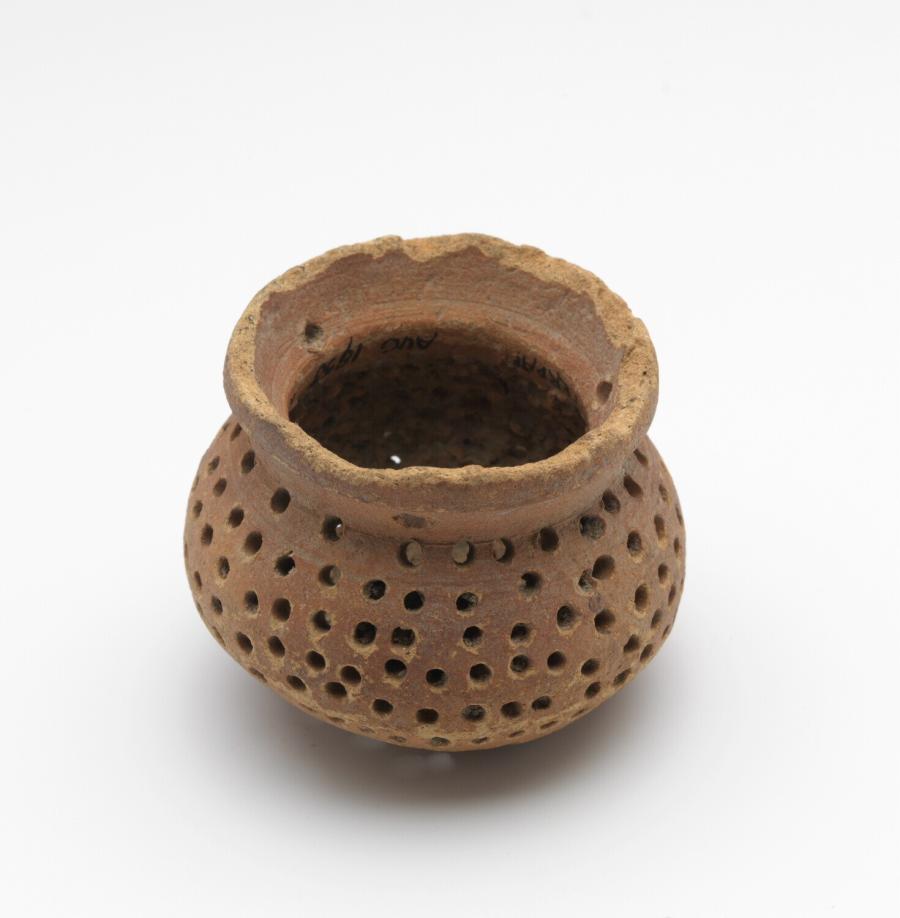
pierced jar

Ask anything

  • Allison asked

    What were jars like this used for? Draining cheese?

  • Museum Boijmans Van Beuningen answered

    Hi Allison, until this day we are still not exactly sure about the use of these pierced jars. It is likely that these jars were used for several purposes. Some researchers state that pierced jars like these were used transport embers or burning wood from one fireplace to another. This way it was easier and safer to make a fire. Others think that this jar could be used to grow leek, like onions and celery; the leek would grow through the holes. There is also a possibility that it was used as a perfume burner, or to prepare chestnuts. As you can see, there are many ways to use this jar. What would you do with it? All the best, Tanja van Oostrum

Loading...

Thank you. Your question has been submitted.

Unfortunately something has gone wrong while sending your question. Please try again.

Request high-res image

More information

Specifications

Title pierced jar
Material and technique Redware
Object type
Pierced jar > Jar > Holder > Kitchen and household > Utensil
Location This object is in storage
Dimensions Height 5,4 cm
Diameter 6,8 cm
Artists Potter: Anoniem
Accession number F 2962 (KN&V)
Credits Gift Coll. Van Beuningen-de Vriese, 1990
Department Applied Arts & Design
Acquisition date 1991
Creation date in 1500 - 1600
Collector Collector / Van Beuningen-de Vriese
Research Show research Alma
Material
Object
Geographical origin The Netherlands > Western Europe > Europe

All about the artist