

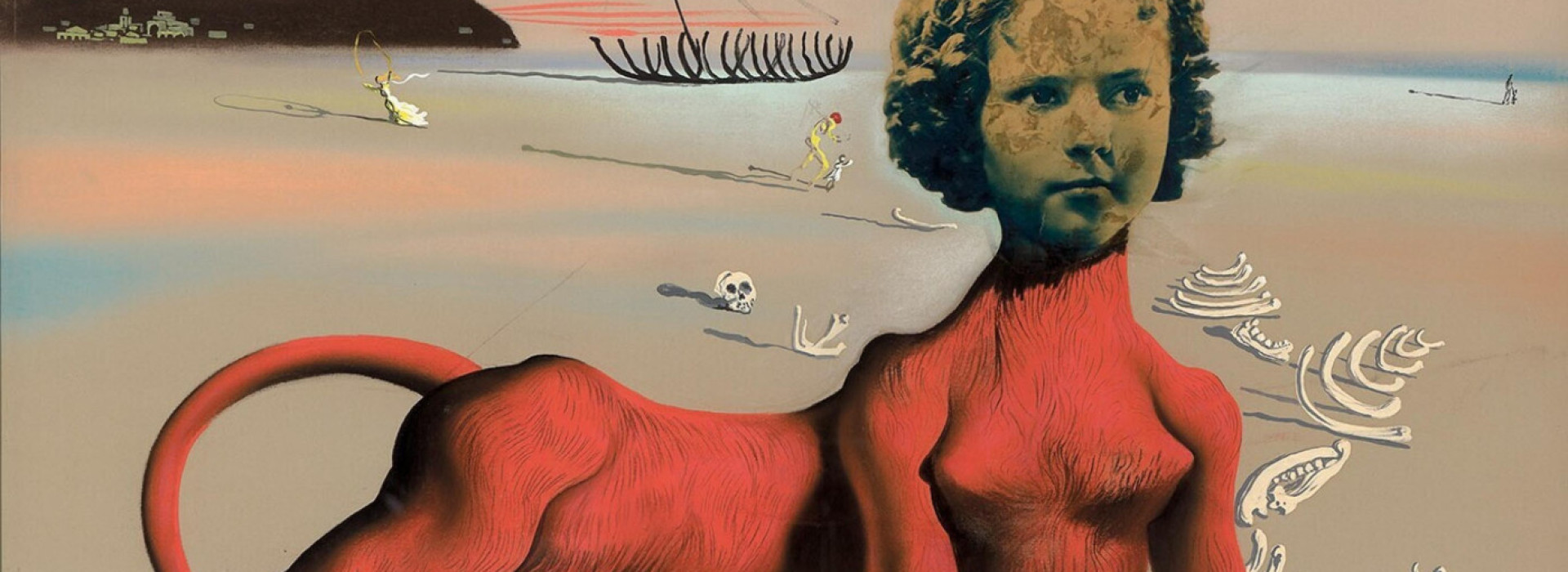
Surrealism Fund
Thanks to the generous annual contribution of a private benefactor, the museum was able to establish the Surrealism Fund in 2023. The museum holds an impressive sub-collection of world-class Surrealist art and an extensive Surrealism library.
The Surrealism Fund aims to unlock, deepen, enrich, and care for this Surrealism collection (both the art and the library). Over the next five years, the fund will be used as a stipend to further develop the collection. Each year, a promising young researcher will be appointed to study a specific part of the Surrealism collection or the bibliophile Surrealism collection, resulting in an annual online article.
Thanks to the fund, art historian Wilko Ruijter was appointed in 2024. His research focuses on the exhibition Fantastic Art, Dada, Surrealism (Museum of Modern Art, New York, 1936–1937). He examines how MoMA director Alfred Barr defined the “fantastic” in this exhibition and how this definition differs from the views of the Surrealists themselves. The research has resulted in an article on the museum’s website; see here the link to the article A ‘Fantastic’ Exhibition. Wilko Ruijter is the first recipient of the stipend, which will be awarded annually in the coming years from the Surrealism Fund.
Thanks to the fund, two new researchers were able to begin their projects in 2025. In The Rise of ‘Fantastic’ Art Exhibitions in Post-war Europe, Alessia Damioli examines exhibitions devoted to fantastic art in post-war Europe, including the 1954 Venice Biennale. Drawing on reviews from the period, she explores how and why interest in fantastic art spread across Europe.
In Louis Maeterlinck and the Fantastic in Art, Lotte Kremer investigates the concept of “fantastic art” in publications predating 1936. Alfred Barr was not the first to explore the fantastic in art: he was influenced by earlier scholars, particularly the Belgian art historian Louis Maeterlinck, who had already published two books on the fantastic as a genre in art in the early twentieth century.