

‘Our visitors can do, discover and experience much more in the depot.’
The staff of the Department of Education and Interpretation are also planning for the new depot. What is their vision and what do they have in store for our visitors?
The depot will have a comprehensive education programme. Why?
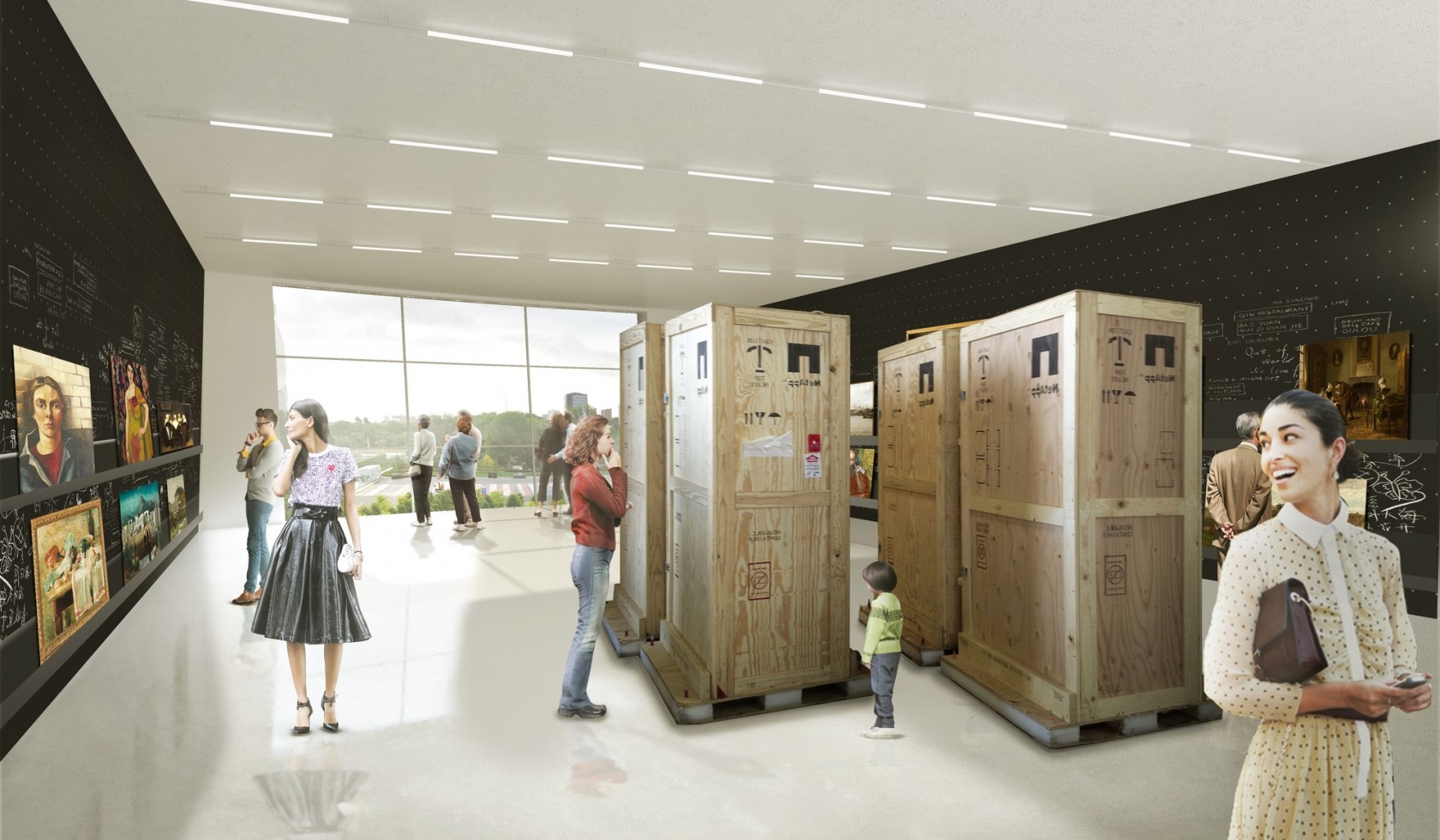
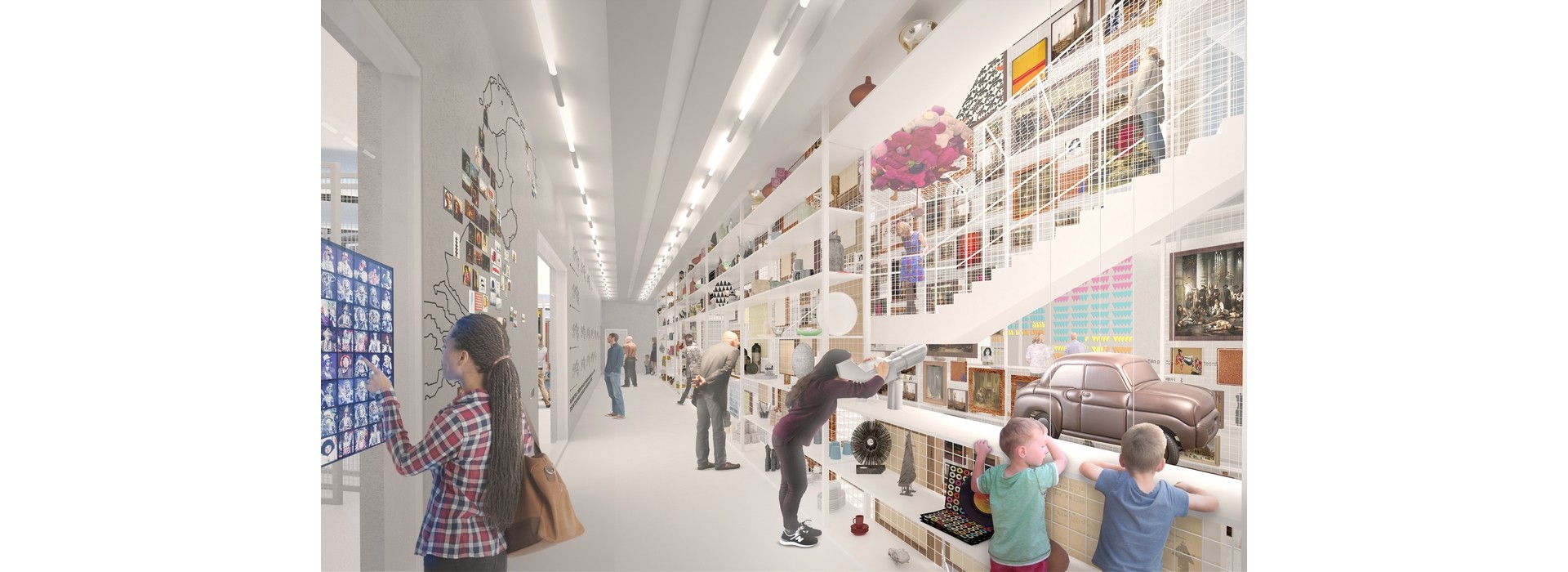
People will soon be coming to the depot for a variety of reasons. Some will want to learn more about a particular subject, while others will just come with friends or relatives to have an enjoyable time. It’ll be a staggering experience for everyone. Visitors walk around in the huge building, surrounded by tens of thousands of artworks. We offer everyone something to help them make the most of their visit. From guided tours, lectures and workshops to interactive floor plans. This enables people at any point in the building to find information about the artworks. These floor plans also let you personalize your visit. If you tell us beforehand what you expect, you’ll receive information and tips relevant to you. We’ll also provide a range of teaching materials for small children and students at schools, colleges and universities.
But you already have a lot of educational activities in the museum?
It’s part of a museum’s job to devote effort to education. Particularly in a city like Rotterdam, where there are many people who aren’t used to visiting cultural institutions. Educational programmes are one of the tools we use to try to make people feel welcome and to enable them to experience art in a way they enjoy.
How will the depot enlarge your range of educational activities?
Hugely. People are used to information being accessible always and everywhere. In the museum, however, we can only ever present a tiny part of our collection and hence also of our art historical knowledge. In the new depot we can show everything, at the same time demonstrating how much attention, care and love our staff give the artworks.
So everything’s accessible and transparent?
Indeed, we’re making ourselves vulnerable as a museum and there’s no selection. That’s in step with the times. Why should a handful of art professionals decide what objects from the huge collection are to be shown and therefore which art is ‘important’? Why can’t members of the public decide for themselves what they value? That’s why we make all the information and data available to the public. For example, you can make personal selections or go into a subject in depth that might be of less interest to others. In that sense the depot belongs to everyone, and during a visit you can get what you want out of it.
How does that work? Can you give me an example?
Imagine you’re a mother in Rotterdam and you’re not used to going to museums. You also have the impression that it’s not much fun for your children because they’re not allowed to touch anything. We’ve developed a game that effortlessly paves a way for you as a family through the building. The depot isn’t a museum. It’s a type of working building. This means you’ll regularly see people at work and you can ask them questions. We also use this idea in visitor information. You don’t just look. You can also do things and you become actively involved in the art and the work of the staff. By the end of a family game you’ll have had an enjoyable time together, and you’ll also have learned something.
So everything’s accessible and transparent?
Indeed, we’re making ourselves vulnerable as a museum and there’s no selection. That’s in step with the times. Why should a handful of art professionals decide what objects from the huge collection are to be shown and therefore which art is ‘important’? Why can’t members of the public decide for themselves what they value? That’s why we make all the information and data available to the public. For example, you can make personal selections or go into a subject in depth that might be of less interest to others. In that sense the depot belongs to everyone, and during a visit you can get what you want out of it.
How does that work? Can you give me an example?
Imagine you’re a mother in Rotterdam and you’re not used to going to museums. You also have the impression that it’s not much fun for your children because they’re not allowed to touch anything. We’ve developed a game that effortlessly paves a way for you as a family through the building. The depot isn’t a museum. It’s a type of working building. This means you’ll regularly see people at work and you can ask them questions. We also use this idea in visitor information. You don’t just look. You can also do things and you become actively involved in the art and the work of the staff. By the end of a family game you’ll have had an enjoyable time together, and you’ll also have learned something.
Depot Journal
This article has been published before in Depot Journal #2 which is part of a series of six. If you would like to receive all the printed Depot journals by post, please send an email to info@boijmans.nl with your full name and address, reference ‘receive Depot Journals’.