:host { --enviso-primary-color: #FF8A21; --enviso-secondary-color: #FF8A21; font-family: 'boijmans-font', Arial, Helvetica,sans-serif; } .enviso-basket-button-wrapper { position: relative; top: 5px; } .enviso-btn { font-size: 22px; } .enviso-basket-button-items-amount { font-size: 12px; line-height: 1; background: #F18700; color: white; border-radius: 50%; width: 24px; height: 24px; min-width: 0; display: flex; align-items: center; justify-content: center; text-align: center; font-weight: bold; padding: 0; top: -13px; right: -12px; } .enviso-dialog-content { overflow: auto; } Previous Next Facebook Instagram Twitter Pinterest Tiktok Linkedin Back to top
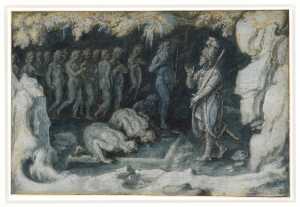
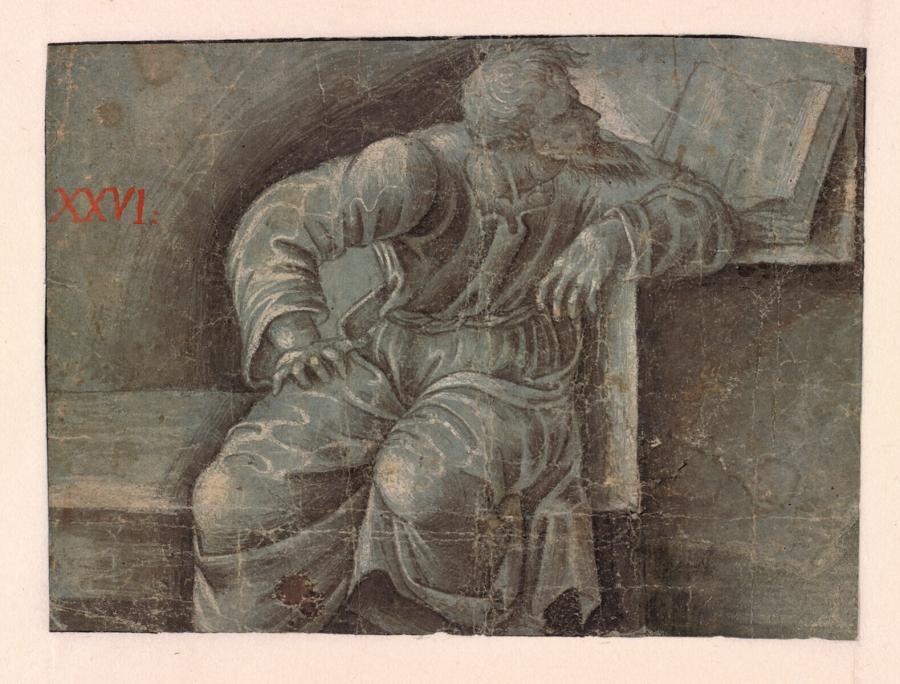
John the Evangelist

Ask anything

Loading...

Thank you. Your question has been submitted.

Unfortunately something has gone wrong while sending your question. Please try again.

Request high-res image

More information

Specifications

Title John the Evangelist
Material and technique Pen and brush and black ink, heightened with white, on grey-green prepared paper
Object type
Drawing > Two-dimensional object > Art object
Location This object is in storage
Dimensions Height 147 mm
Width 200 mm
Artists Artist: Jacopo da Bologna
Previously attributed: Jacopo Ripanda
Accession number I 384 recto (PK)
Credits Loan Stichting Museum Boijmans Van Beuningen (former Koenigs collection), 1940
Department Drawings & Prints
Acquisition date 1940
Creation date in circa 1490-1530
Inscriptions 'XXVI:' (recto, above left, pen in red ink)
Collector Collector / Franz Koenigs
Mark Anoniem (L.521a), F.W. Koenigs (L.1023a) both on removed addition
Provenance De Clementi (L.521a on removed addition to the lower right corner of the recto side); art dealer Julius W. Böhler (1883-1966), Lucerne; Franz W. Koenigs (1881-1941, L.1023a), Haarlem, acquired in 1929 (North Italian, early 16th century); D.G. van Beuningen (1877-1955), Rotterdam, acquired with the Koenigs Collection in 1940 and donated to Stichting Museum Boijmans Van Beuningen
Research Show research Italian Drawings 1400-1600
Literature Bologna 1988, pp. 232-33, fig. 13 (r+v)
Material
Object
Technique
Highlight > Painting technique > Technique > Material and technique
Geographical origin Italy > Southern Europe > Europe

Do you have corrections or additional information about this work? Please, send us a message
Entry catalogue Italian Drawings 1400-1600

Author: Surya Stemerding

The drawn oeuvre of Jacopo da Bologna, a minor artist from the Emilia, was not defined until 1988. Prior to that his drawings, this one included, were regarded as the work of Jacopo Ripanda (mid-fifteenth century-after 1517), his presumed teacher.[1] Faietti and Ebert Schifferer (1988) were the first to distinguish three different hands in the drawings attributed to Ripanda: Jacopo Ripanda, the Master of the Lille Adoration and Jacopo da Bologna. They only allotted a small part of that collection to Da Bologna, a mere ten sheets. They did so on the basis of stylistic and thematic features in common with a remnant of a lost sketchbook, now in Lille, that contains the annotation ‘Jac pictor d[…] bollogna’ and the date 1516.[2] They allocated another drawing in Rotterdam to that group (I 33), together with this one.

There is a composition drawing in London and two sheets with drawings on both sides in Berlin that are very comparable in both style and technique to the evangelists on the two sides of the Rotterdam sheet.[3] They are all in a striking chiaroscuro technique with dark washes and white highlights on a dark ground. Each of the two Berlin sheets has conspicuous Roman numerals in brush and red paint. They are similar to the ones on the Rotterdam sheet, indicating that they share a common provenance, possibly the same workshop stock.[4] The same red gouache was used on the back of the Rotterdam sheet, where St Luke is painting a scene of saints on panel after having just dipped his pen in the little bowl on his desk.

Footnotes

[1] Faietti and Ebert-Schifferer in: Bologna 1988, pp. 213-36, 237-45 respectively.

[2] Musée des Beaux Arts, inv. Pl 380-97; Bologna 1988, no. 93, ill.; Elen 1995, no. 52. The drawings on the thirteen loose parchment sheets, together with drawings in the Louvre (nos. 94-95), are regarded as the core of Jacopo da Bologna‘s drawn oeuvre because of their coherent subjects and style.

[3] British Museum, inv. 1887,0722.35; Staatliche Museen, Kupferstichkabinett, inv. KdZ 4251, 4252.

[4] The sheets in Berlin are numbered ‘XXIIII’ and ‘XXIX’, while the one in Rotterdam is numbered ‘XXVI’.

Show research Italian Drawings 1400-1600
Show catalogue entry Hide catalogue entry

All about the artist

Jacopo da Bologna

werkzaam circa 1490 - 1530

Bekijk het volledige profiel